Διαφορική Θερμιδομετρία Σάρωσης (Differential Scanning Calorimetry – DSC)
Η Διαφορική Θερμιδομετρία Σάρωσης (DSC) επιτρέπει τον ακριβή προσδιορισμό των θερμικών μεταπτώσεων και των ενεργειακών διεργασιών σε στερεά, σκόνες και υγρά, μετρώντας τη ροή θερμότητας μεταξύ δείγματος και αναφοράς, για την ανάλυση τήξης, κρυστάλλωσης, υαλώδους μετάπτωσης, αντιδράσεων και αποσύνθεσης.
DSC – Differential Scanning Calorimetry
Heat flux measurements from -180°C to 1750°C
Differential Scanning Calorimetry (DSC) enables the precise determination of thermal transitions and energetic processes in solids, powders and liquids. By measuring the heat flow between sample and reference can be used to melts, crystallization, glass transitions, reactions and decompositions – a key method in research, development and quality control.
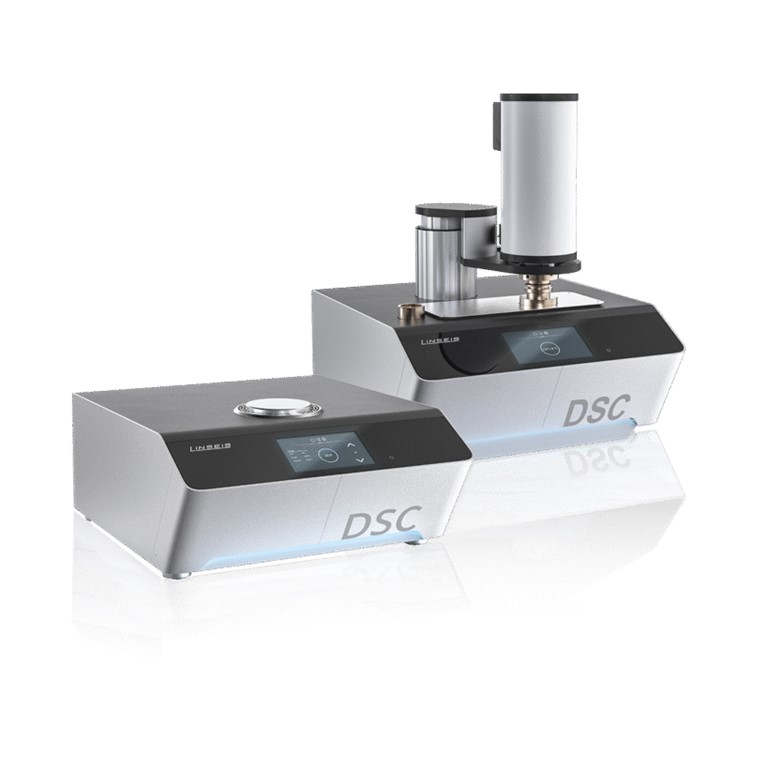
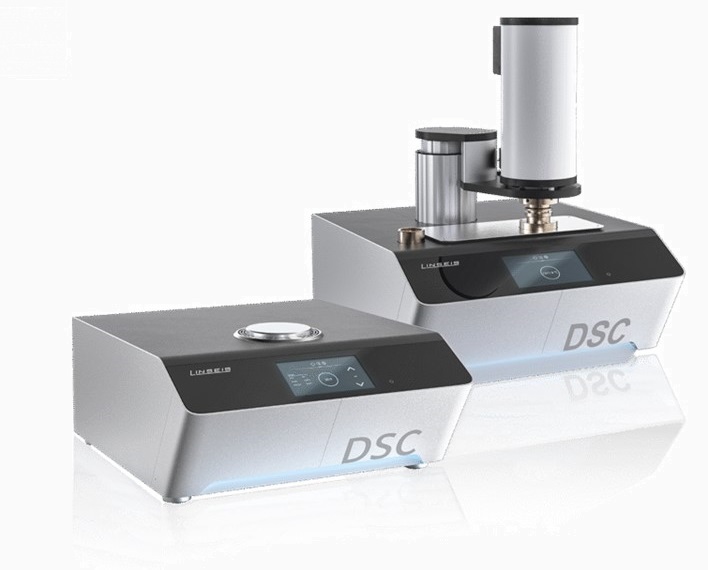
Linseis has been developing high-quality DSC systems for a wide range of requirements since 1957: from fast chip DSC devices to high-temperature calorimeters with measuring ranges from -180 °C to 1750 °C and optional pressure operation up to 150 bar. This allows polymers, pharmaceuticals, foodstuffs, metals, ceramics and numerous other materials.
DSC devices record key thermal parameters such as glass transition, melting and crystallization behavior, reaction enthalpies, specific heat capacities (Cp) and curing kinetics, as well as thermal stability, purity and polymorphism.
They fulfill all relevant international standards such as ASTM D3418, ASTM E793, ASTM E794, ASTM E1269, ASTM E1356, ASTM E2160 and ASTM E2716, thus ensuring reproducible and standard-compliant results.
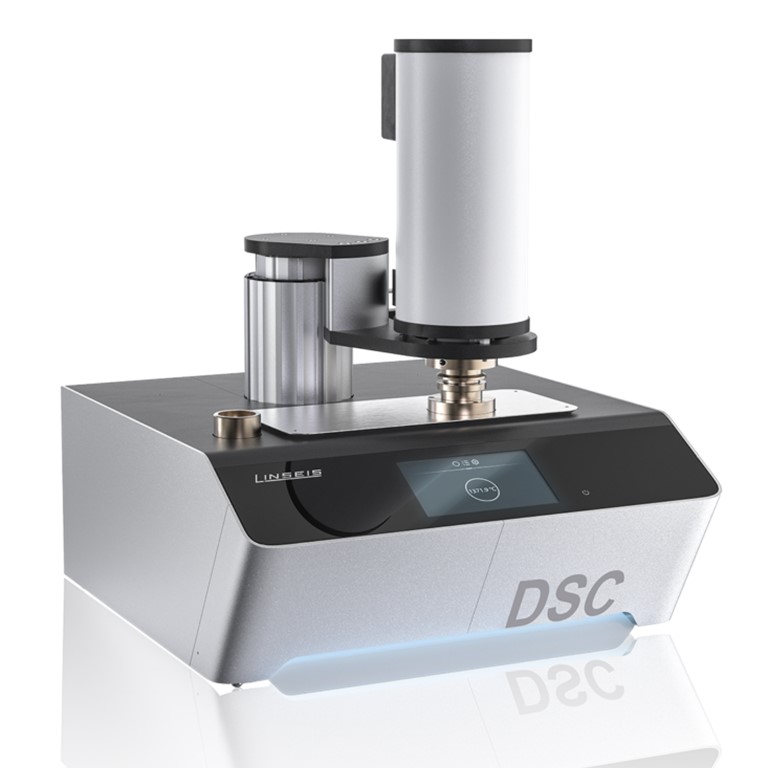
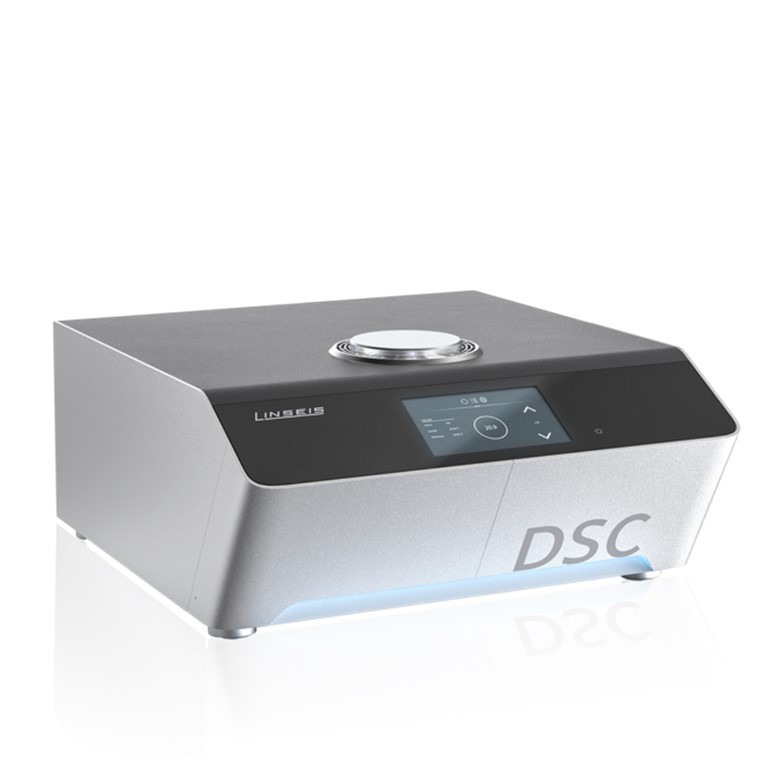
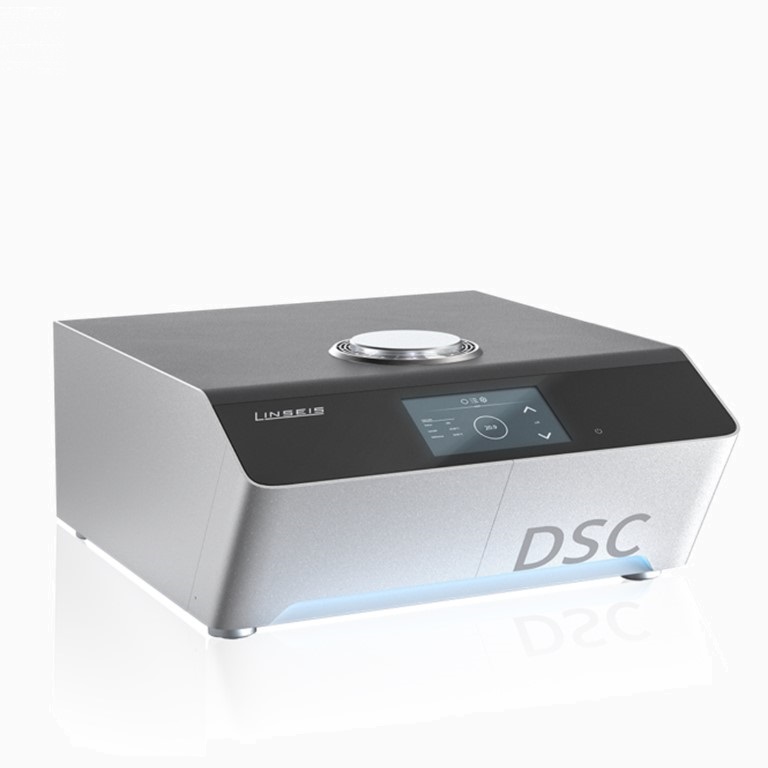
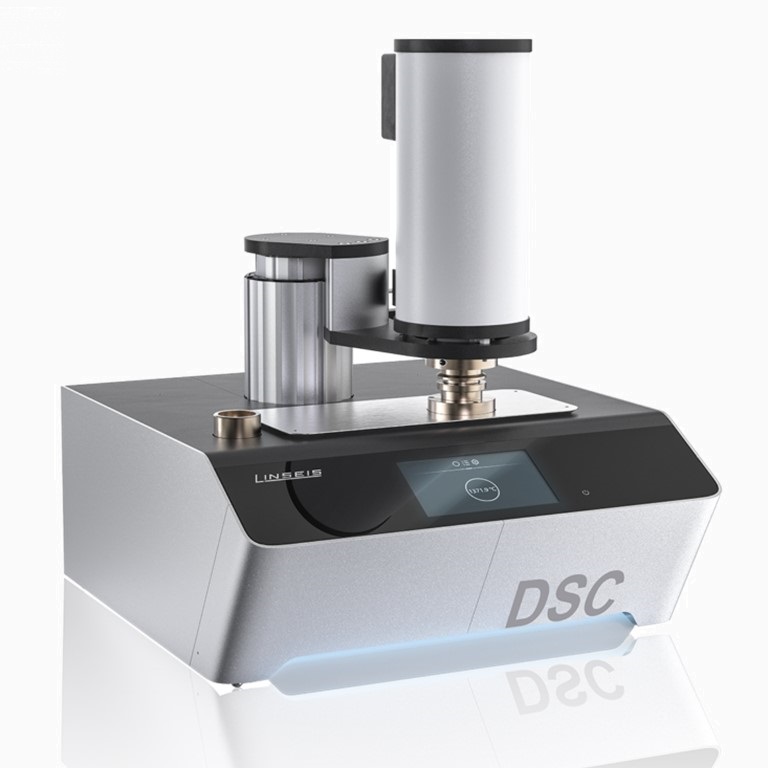
All DSCs at a glance
Differential Scanning Calorimetry (DSC) is one of the most important methods for analyzing thermal transitions and energetic material processes. By precisely measuring the heat flow between sample and reference, melting, crystallization, glass transitions, reactions, decomposition processes and specific heat capacities can be clearly determined. The DSC thus provides fundamental information for the characterization of polymer properties, purity, stability and process capability – essential for research, development and quality assurance.
Linseis has been developing and producing one of the most comprehensive DSC product lines in the world since 1957. The portfolio ranges from ultra-fast Chip-DSC systems to robust high-temperature calorimeters that measure from -180 °C to 1750 °C and – depending on the model – under pressure up to 150 bar. This allows organic and inorganic samples, polymers, pharmaceuticals, metals, ceramics and foodstuffs to be analyzed reliably and reproducibly.
Measured variables and applications:
🔹 Glass transition (Tg)
🔹 Melting and crystallization
🔹 General phase transformations
🔹 Melting and crystallization enthalpy
🔹 Reaction enthalpies (endo-/exothermic)
🔹 Curing / curing processes
🔹 Crystallinity
🔹 Purity / polymorphism
🔹 Thermal and oxidative stability (e.g. OIT)
🔹 Specific heat capacity (Cp)
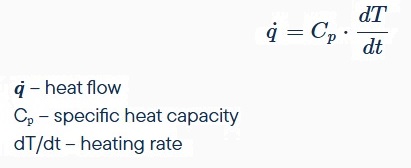
In differential scanning calorimetry (DSC), the heat flow between the sample and the reference is measured as a function of temperature or time. The underlying DSC equation describes the relationship between heat flow, specific heat capacity and heating rate and thus enables the quantitative evaluation of thermal processes.
On this basis, endo- and exothermic effects such as melting, crystallization, glass transitions, reactions or curing processes can be precisely determined. The DSC thus provides reliable information on enthalpies, phase transitions, thermal stability and material-specific structural changes.
Unique features of Linseis DSC systems
Linseis has been setting standards in calorimetry for decades.
DSC systems combine maximum sensitivity, modular flexibility and state-of-the-art sensor technology – for precise, reproducible results in research, development and quality assurance.
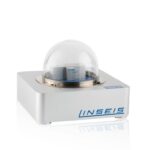
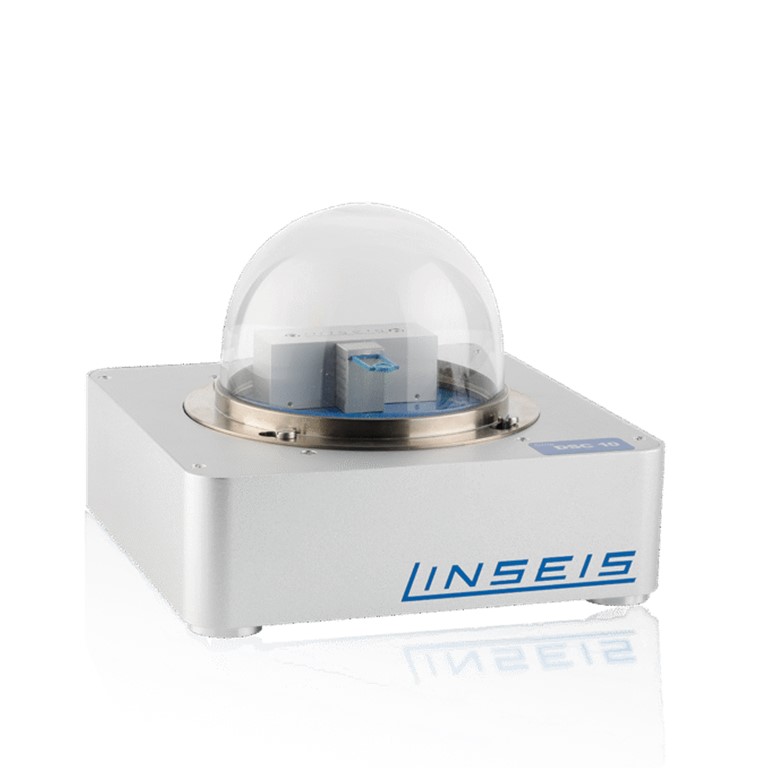
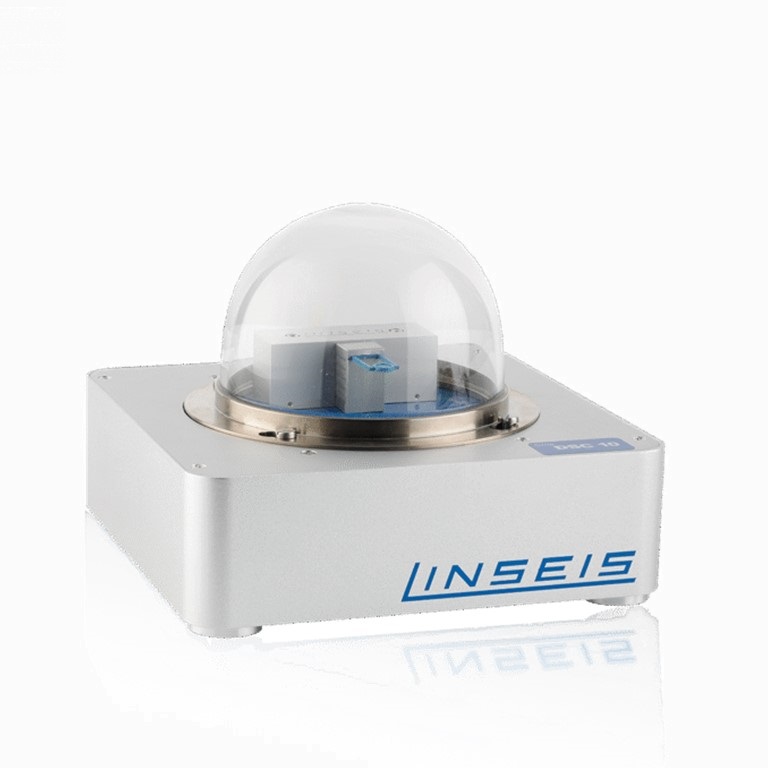
1. chip DSC technology – extremely fast, highly sensitive and flexible
The chip DSC platform combines sensor, furnace and heating element on a single microstructured chip.
This enables heating rates up to 1000 K/min, extremely short cooling times (from 400 °C to 30 °C in four minutes), an exceptionally stable baseline and maximum signal purity.
The sensors are user-changeable, have up to three sensor configurations and allow measurements even under reducing atmospheres.
The chip DSC technology sets new standards for screening, polymer analysis and rapid process development.
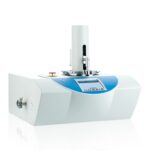
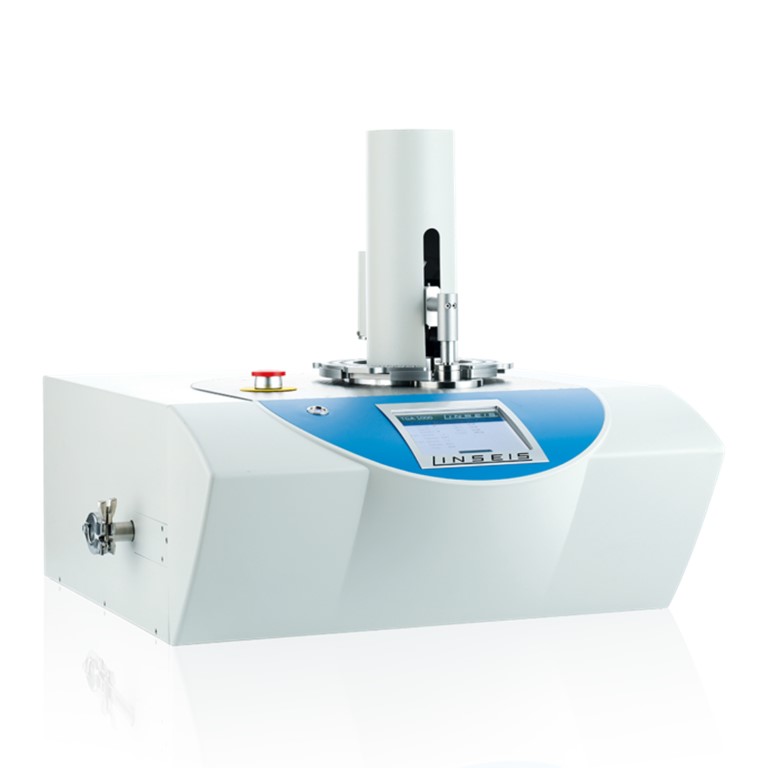
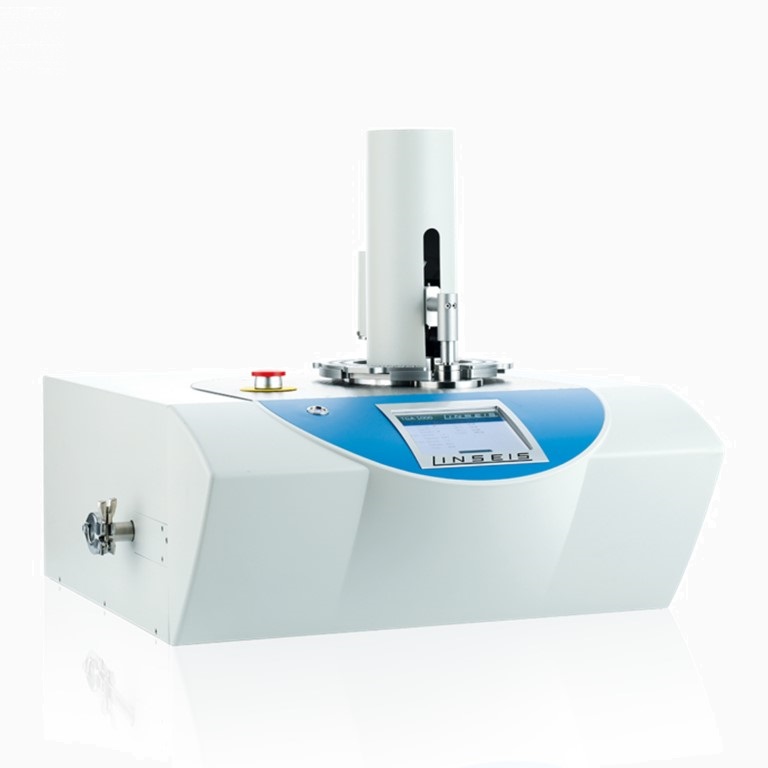
2. high temperature and high pressure DSC – precise heat flow measurements up to 1750 °C and 150 bar
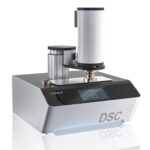
With the HDSC L62, UDSC L64 and DSC L92, Linseis offers one of the broadest calorimetric spectra on the market.
The systems enable precise DSC measurements up to 1750 °C, are vacuum-tight up to 10⁻⁵ mbar and – depending on the model – are available for high-pressure applications up to 150 bar.
The modular design with interchangeable furnaces, turntables for multiple furnaces and optional gas conditioning systems ensures maximum flexibility for metals, ceramics, building materials and reactive materials.
The 3D/tripod sensor technology offers maximum resolution and thermal stability across the entire measuring range.
3. expandable measuring systems – RAMAN, CCD, UV curing, EGA and modular cooling
DSC systems can be individually configured:
From RAMAN and CCD camera coupling to UV curing modules and MS/FTIR/GC gas analysis.
Various cooling options (Peltier, intracooler, LN₂, thermostat) enable precise temperature control over the entire range.
Furnaces and measuring systems can be replaced by the user, spare parts are cost-efficient, and the systems remain low-maintenance and flexibly expandable in the long term.
This ensures maximum future-proofing and a clear competitive advantage over rigid device concepts.
Why Linseis – The difference in differential scanning calorimetry (DSC)
☑️ Long-Term Investment with Added Value
The focus is not only on precision, but also on sustainable added value throughout the entire lifecycle. These systems offer some of the lowest operating costs in their class thanks to durable, low-maintenance components, a robust design, and intelligent software maintenance.
Fewer service calls, shorter downtimes, and continuous remote updates ensure maximum system availability and future-proof operation — for decades to come.
☑️ Customized Solutions – Flexibility as Standard
Every measuring task is unique – which is why systems are not limited to standard configurations, but can be precisely tailored to specific applications. Whether a special furnace, custom sensor technology, an extended temperature range, or customer-specific software integration, solutions can be adapted to match exact requirements.
With a modular product architecture, customization becomes standard – delivering fast, precise, and reliable solutions for even the most demanding applications.
☑️ Technological Pioneers and Innovation Since 1957
LINSEIS has been a technological pioneer in thermal analysis for more than six decades. With one of the highest in-house production rates in the industry and an excellent R&D department, systems are developed that continuously set new standards in precision, stability, and adaptability.
From the mechanical design and electronics to the software, every core system component is developed in-house, ensuring technologically advanced, high-performance, and uncompromisingly precise measurement technology Made in Germany 🇩🇪.
☑️ Software Expertise at the Highest Level
With the new LiEAP software suite, LINSEIS is redefining the standard in thermal analysis. Modular in design, intuitive to use, and equipped with state-of-the-art evaluation and remote functions, it ensures maximum efficiency, transparency, and control at every step of the process.
Areas of application of differential scanning calorimetry