Bioreactors
HABITAT research bioreactors from ΙΚΑ , enable cell culture and microbial fermentation with precise control of temperature, pH, and gas flow, ensuring reliable conditions for modern bioprocessing applications.
Bioreactors
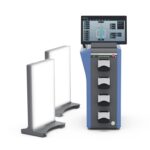
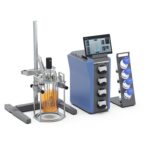
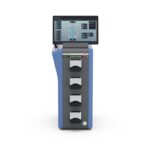
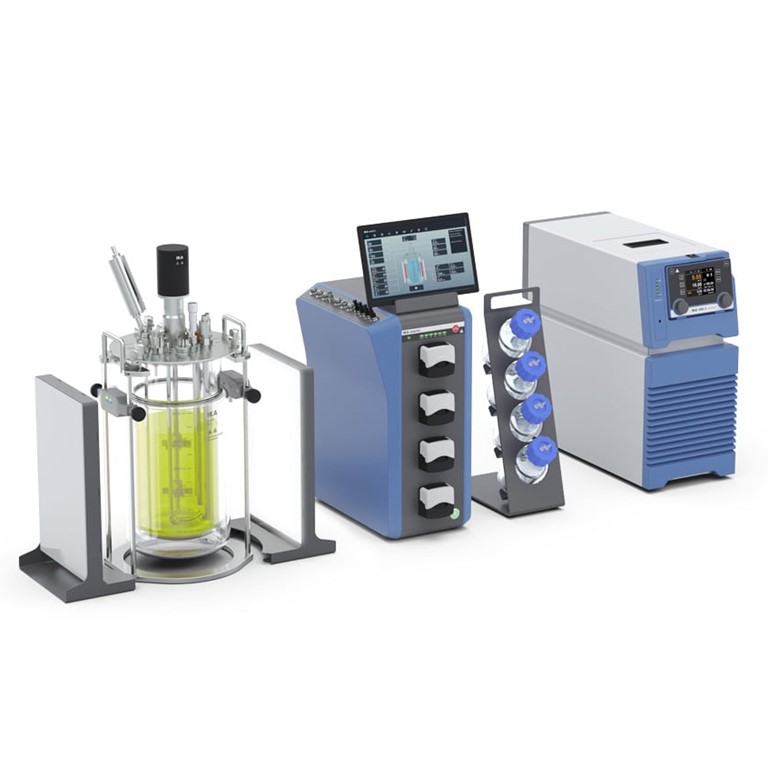
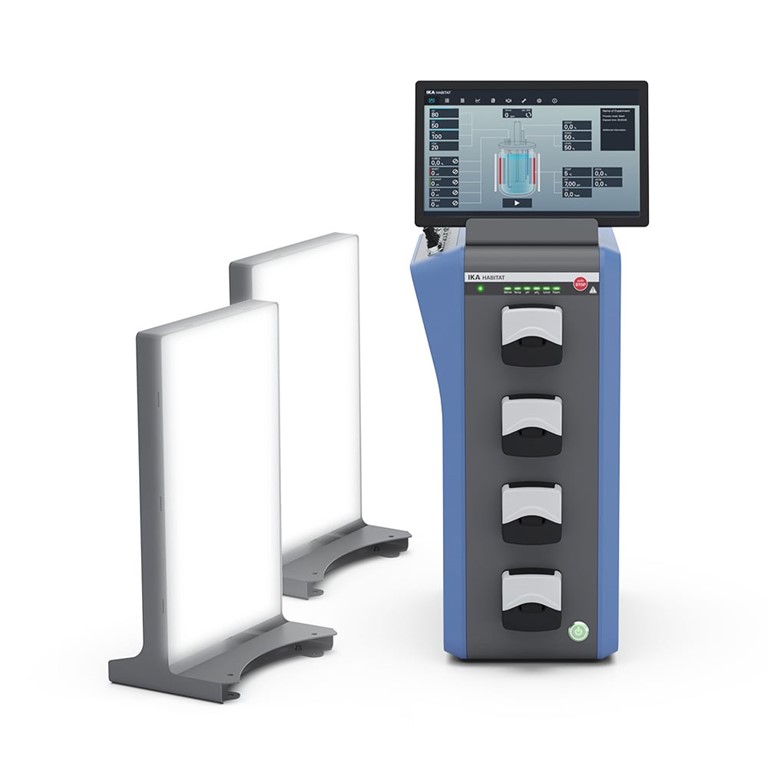
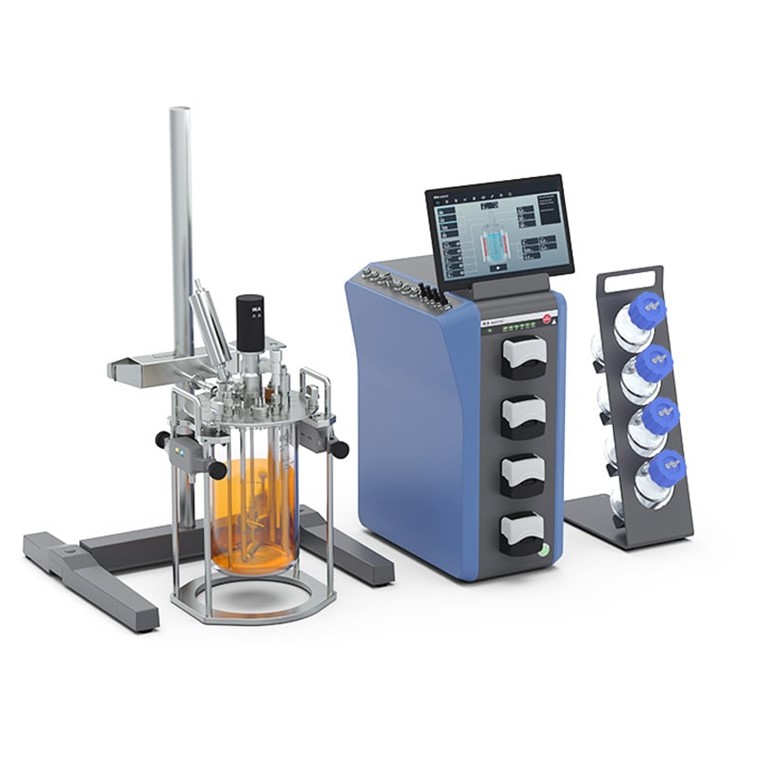
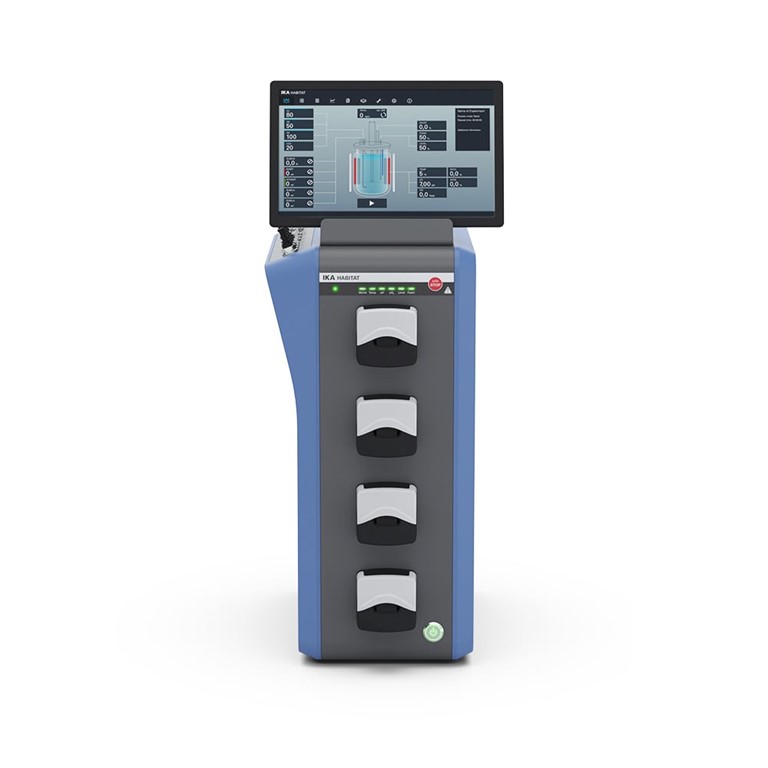
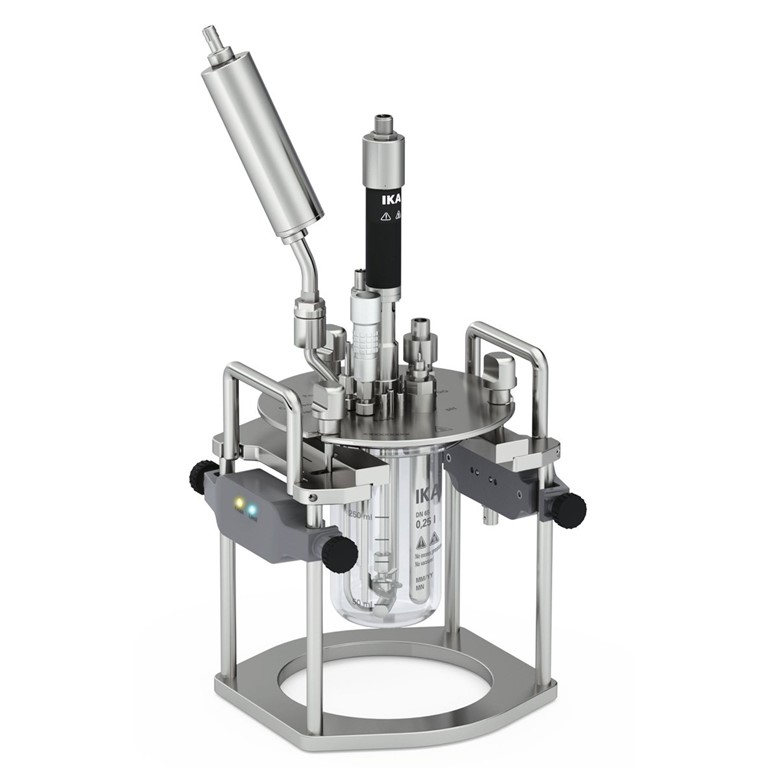
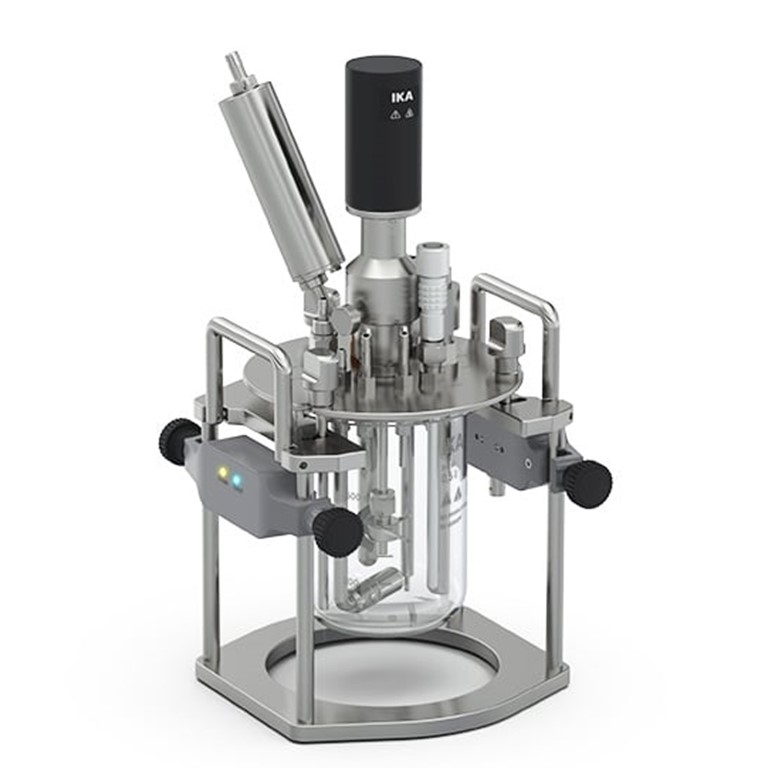
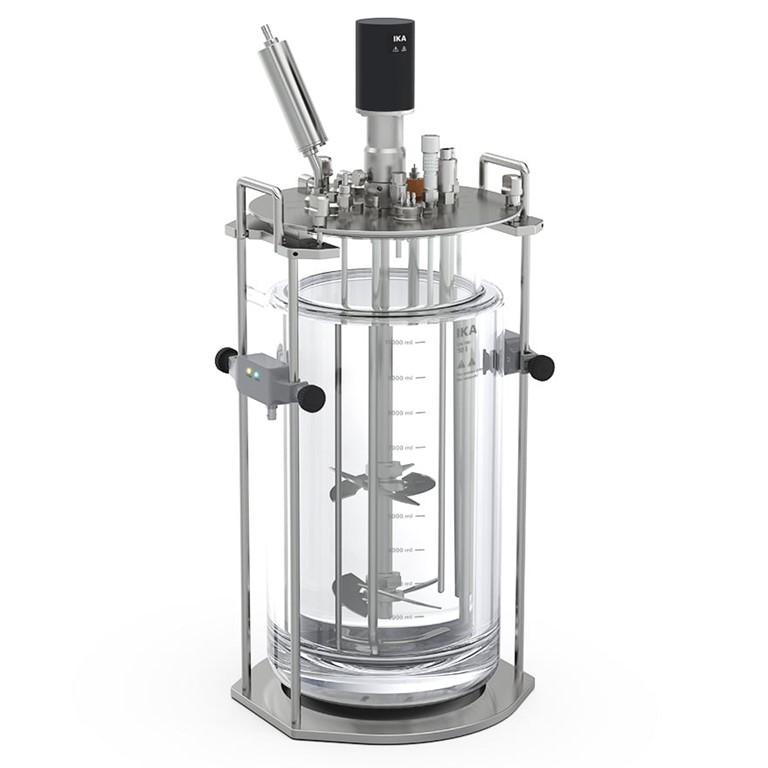
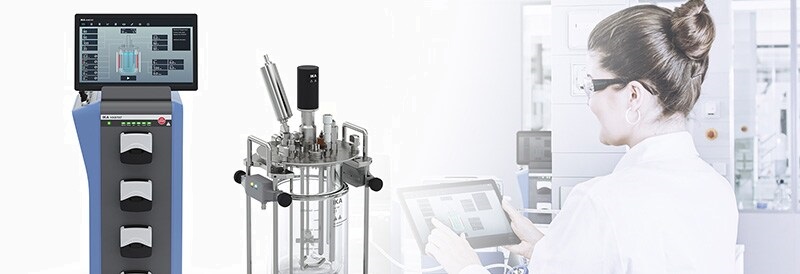
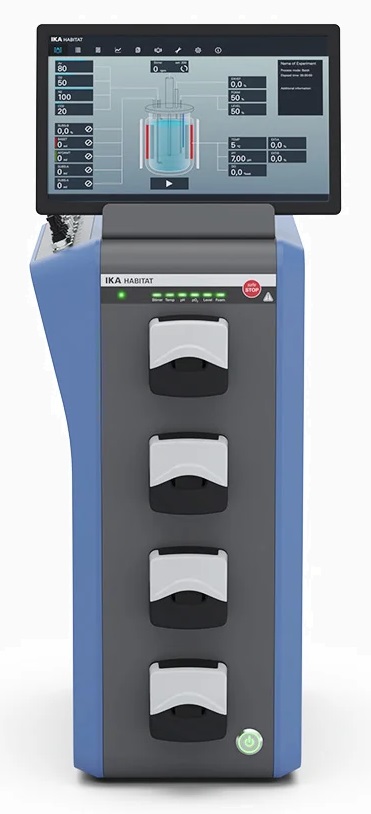
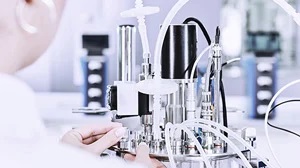
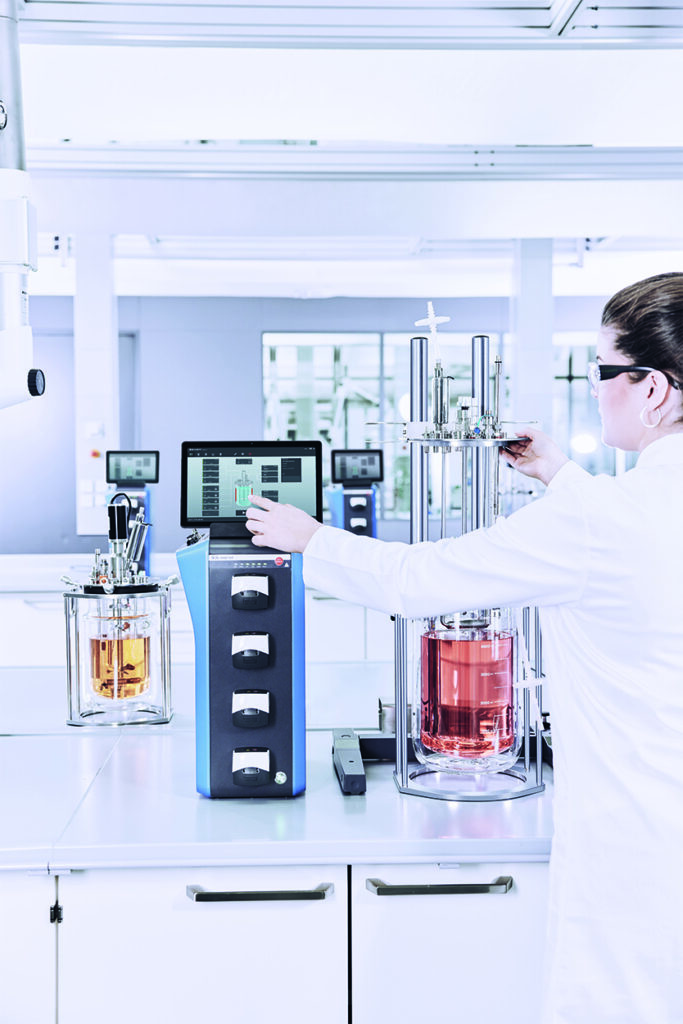
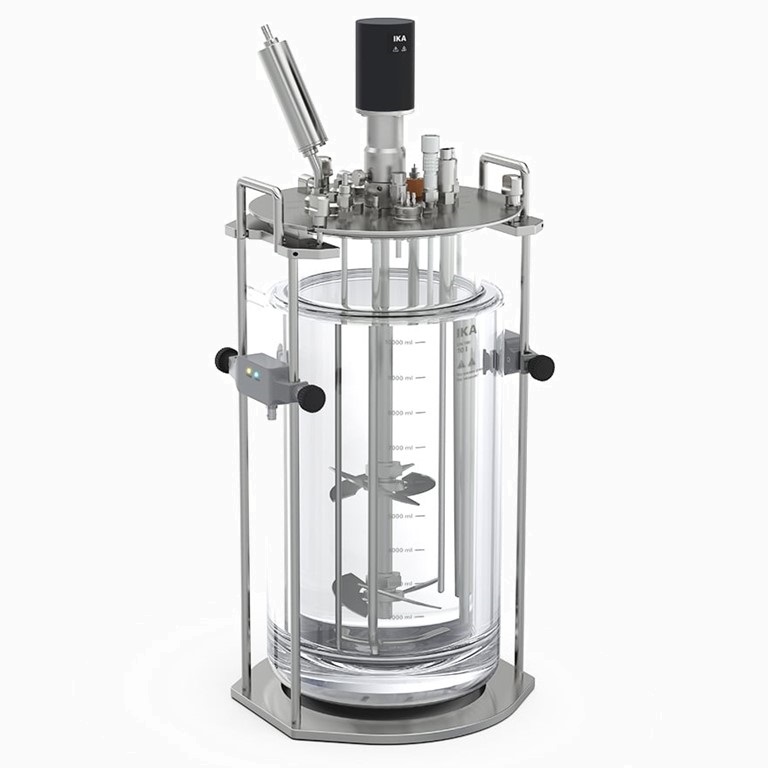
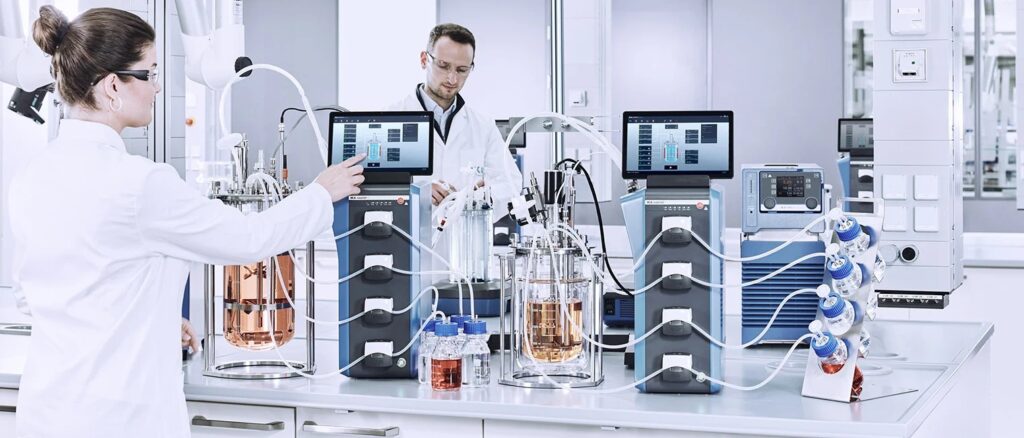
The HABITAT research system from IKA is an award-winning benchtop bioreactor, photobioreactor, and fermenter designed for cell culture, microbial fermentation, and phototrophic cultivation. Equipped with a touchscreen control interface, a 10 L vessel, and precision pump heads for accurate fluid handling, it combines more than 100 years of IKA expertise in laboratory technology with modern bioprocessing innovation. The compact design delivers efficient mixing, precise temperature control, and advanced automation, making it ideal for controlled laboratory studies while maintaining a small footprint on the bench.
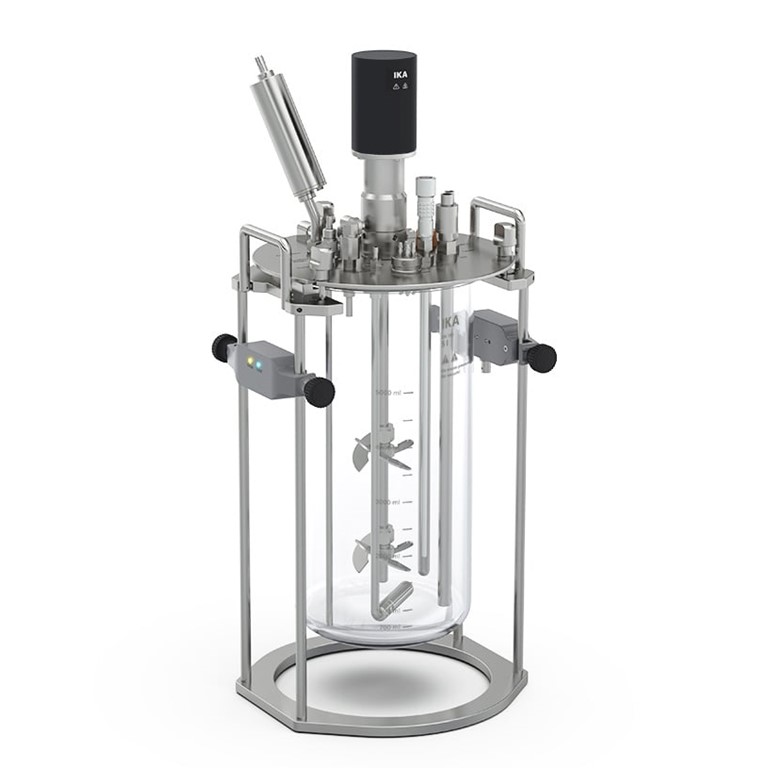
Designed for maximum versatility, the system supports a wide range of cell types and fermentation processes through a bioreactor lid with multiple ports and connections, enabling flexible configuration for different experimental needs. Integrated sensor technology and intuitive control software allow fully automated regulation of critical parameters such as pH, dissolved oxygen, and temperature, ensuring reliable and reproducible conditions for demanding bioprocess workflows.
Key Features
🟦 Touchscreen control interface for system monitoring and operation
🟦 10 L vessel configuration for versatile bioprocess studies
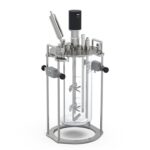
🟦 Bioreactor lid with multiple ports and connections
🟦 Integrated pH, DO, temperature, anti-foam, and level sensors
🟦 Compatibility with advanced sensors such as viable biomass and off-gas analysis
🟦 Precision pump heads for accurate fluid dosing and transfer
Key Benefits
🟦 Flexible platform for cell culture, fermentation, and phototrophic cultivation
🟦 Automated control of key parameters for stable process conditions
🟦 Improved data monitoring through advanced sensor integration
🟦 User-friendly operation with intuitive software setup
🟦 Compact benchtop design that saves valuable laboratory space
With its combination of versatility, automation, and advanced monitoring capabilities, the HABITAT research bioreactor provides researchers with a powerful platform for modern bioprocess development, enabling precise control and reliable results across a wide range of laboratory applications.
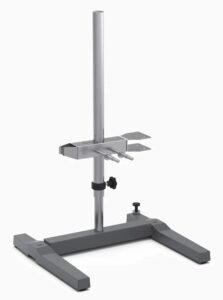
Ergonomic lid stand
The HABITAT bioreactor lid can be attached to a lid stand. This allows for individual components of the HABITAT bioreactor to be easily mounted or dismounted, while enabling safe handling of the lid and fragile sensors. Our mechanism also allows for easy height adjustment of the lid stand, ensuring ergonomic handling.
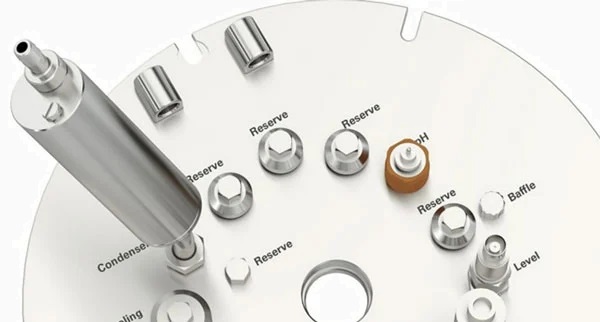
Clearly labeled lid ports
The HABITAT bioreactor lid features clearly marked ports for easy identification and assembly. This simplifies the process of connecting the bioreactor to various input and output lines, ensuring smooth and efficient operations and preventing errors during setup and operation.
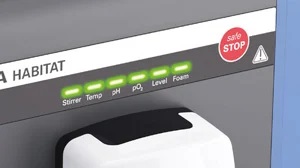
Status LED display
The HABITAT bioreactor controller is equipped with status LEDs which provide immediate malfunction information, even if a tablet or PC is not available. The LED bar indicates the status of key device parameters, including the stirrer, temperature, pH, pO2, level, and foam.
Cross-Platform Integration
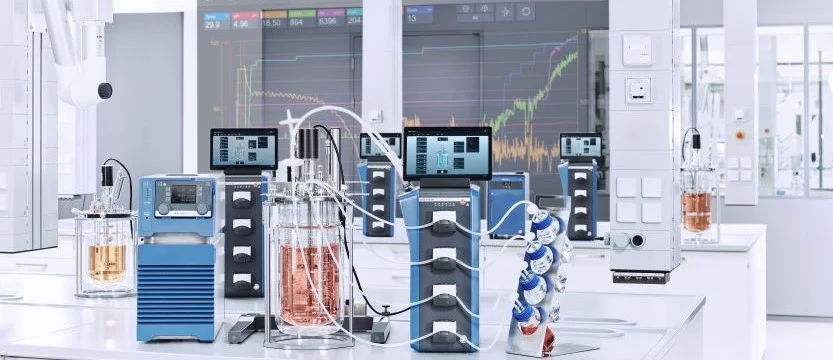
OPC UA integration links to plant SCADA systems for large-scale bioprocessing control. USB, Ethernet, and RS-232 interfaces enable data connectivity
Additional free lid ports enable integrating specialized components into the bioreactor or fermentation chamber
Modular System
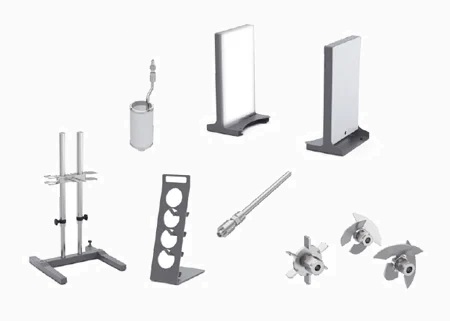
Mix and match the HABITAT’s accessories to create the optimal bioreactor package for your bioprocessing needs.
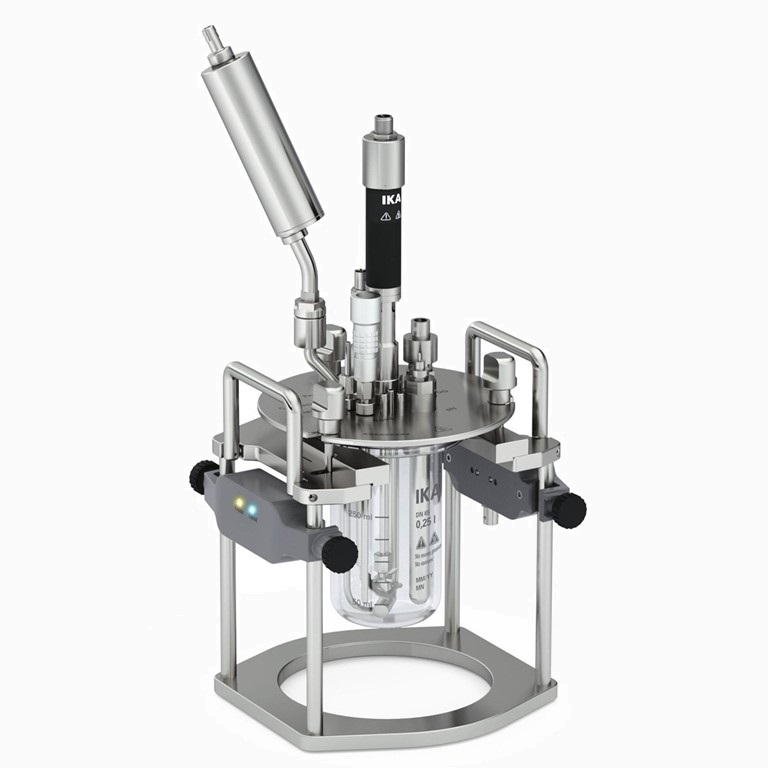
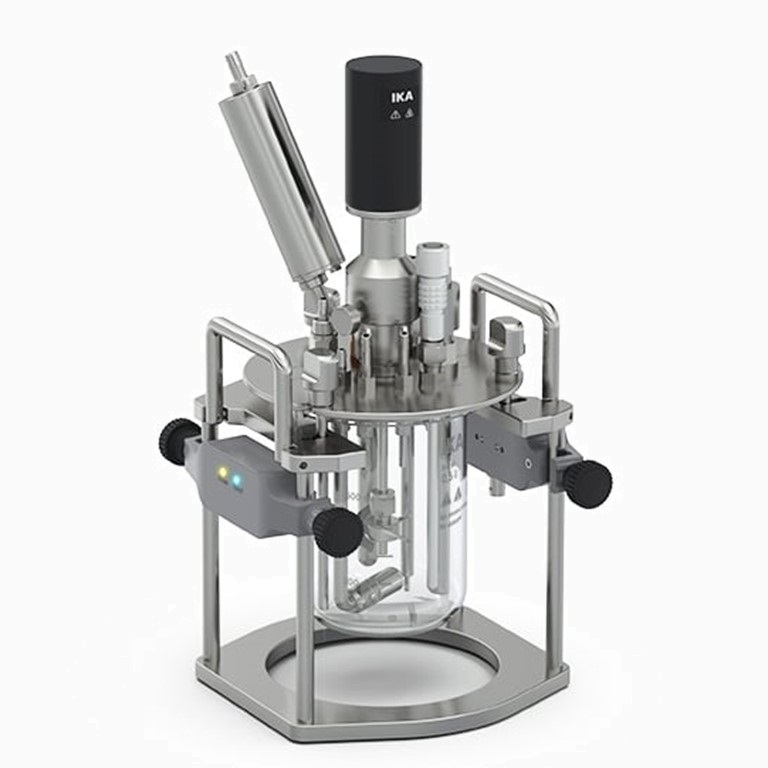
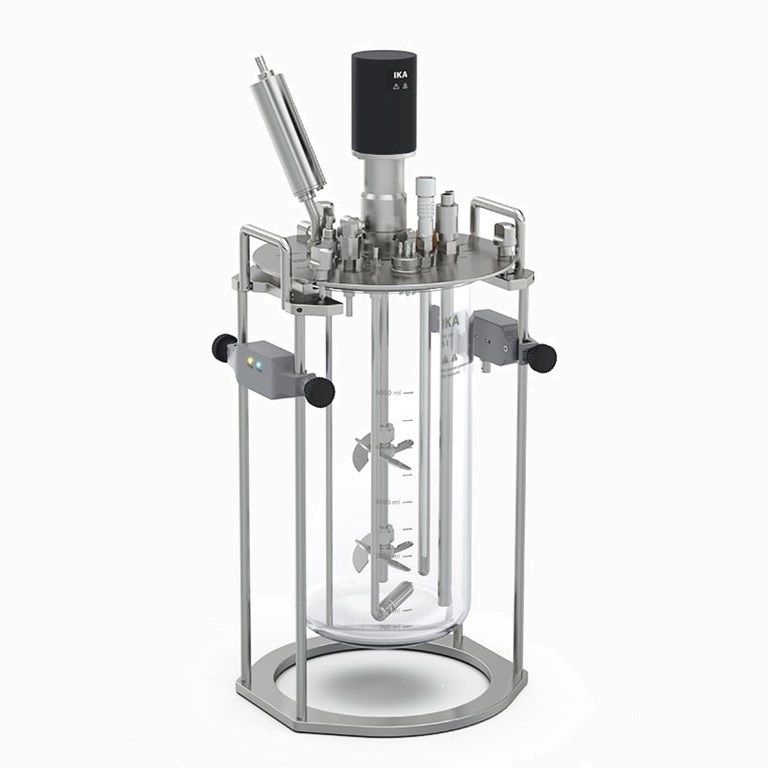
Vessels: Single- and double-wall glass vessels (from 0.5 l to 10 l)
Key vessel components
- Impellers: Rushton and 3-pitched blade
- Spargers (micro or ring), baffle, foam breakers, spin filters, harvest pipes
Sensors (by IKA or 3rd party):
Temperature, pH (digital or analog), DO (digital, analog or optical), CO2, foam, level, turbidity (3 options), viable cell mass, redox
LED panels to convert your bioreactor into a photobioreactor
Temperature control
- Circulator/thermostat that can be controlled via the HABITAT control unit
- Cooling finger, heating blanket
Off-gas analysis via BlueVary off-gas analyzer
Other accessories to enable ergonomic working
Lid stand, sample flask racks, tube sets, and other accessories.
Bioreactors in Bioprocessing and How They Work
Bioreactors are essential tools in modern biotechnology, enabling researchers to cultivate cells, microorganisms, or tissues in a controlled environment. Whether you’re working on producing proteins, biofuels, or bioplastics, bioreactors create the optimal conditions necessary for biological reactions to occur at scale. These highly engineered systems are central to the success of numerous industries, from pharmaceuticals and biomedicine to environmental science and industrial processing.
WHAT IS A BIOREACTOR?
At its core, a bioreactor is a device that provides a controlled environment where biological processes can take place. These processes are typically used to produce bioproducts such as proteins, vaccines, biofuels, and other valuable compounds. The bioreactor’s main purpose is to maintain optimal conditions for the growth of cells or microorganisms by regulating key parameters such as temperature, pH, oxygen levels, and nutrient supply. Bioreactors can be found in a range of sizes and designs, from small benchtop units used in academic research to industrial-scale systems designed for mass production. No matter the scale, the principles behind bioreactor operation remain the same: maximizing productivity by providing an ideal growth environment. To fully leverage their potential, it’s important to understand their essential components and how they function. |
ESSENTIAL BIOREACTOR COMPONENTS AND THEIR FUNCTIONALITY
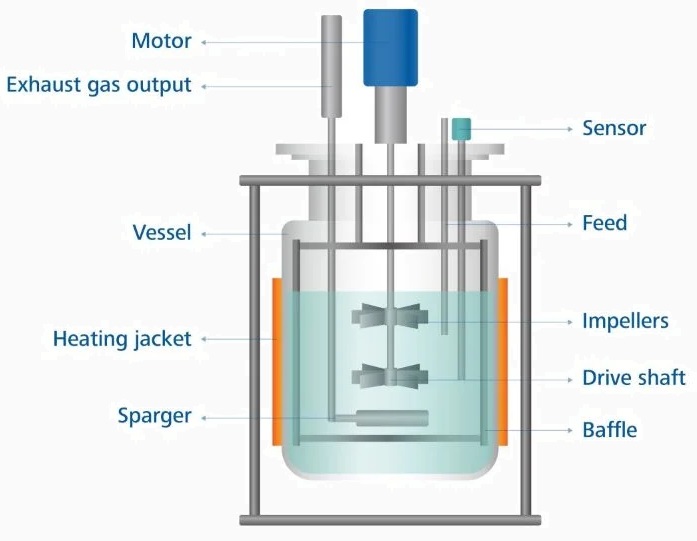
To understand how a bioreactor works, we need to explore its key components. Each part plays a critical role in maintaining the optimal environment for biological growth and production. Here’s a detailed breakdown of the most important components:
🟦 Vessel – The chamber where cell growth or fermentation occurs, typically made from glass, plastic, or stainless steel depending on scale and sterilization requirements.
🟦 Agitation & Mixing System – Impellers and stirrers ensure uniform distribution of nutrients, gases, and temperature. Axial impellers are used for sensitive mammalian cells, while radial impellers suit microbial cultures.
🟦 Sensors & Monitoring – Integrated sensors measure temperature, pH, dissolved oxygen (DO), and nutrients in real time for continuous process monitoring.
🟦 Automated Control System – Automatically adjusts gas flow, stirring speed, and pH to maintain stable process conditions.
🟦 Gas Supply System – Spargers and gas controllers deliver oxygen and other gases, while exhaust systems remove CO₂ and waste gases.
🟦 Temperature Control – Heating and cooling systems maintain the optimal temperature required for cell growth or fermentation.
🟦 Pumps & Feeding Systems – Pumps add nutrients or media, supporting fed-batch or continuous bioprocess operation.
THE BIOPROCESS WORKFLOW: FROM PREPARATION TO HARVEST
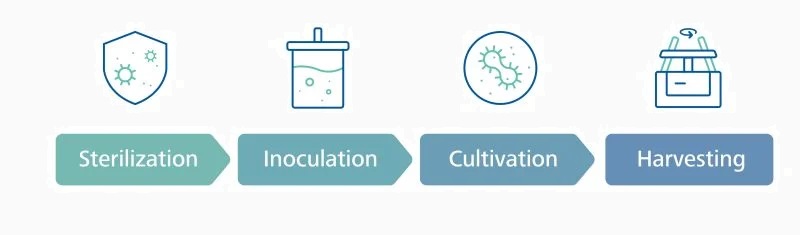
Bioprocessing with bioreactors follows a well-defined workflow that involves several stages, each designed to maintain optimal conditions for the target cells or microorganisms:
1. Sterilization: Sterilizing the bioreactor and its components is critical to prevent contamination. The vessel, piping, and associated equipment must be thoroughly sterilized using methods such as steam-in-place (SIP) or autoclaving to ensure that no unwanted microorganisms interfere with the process.
2. Inoculation: Once the system is sterilized, the desired cells or microorganisms are introduced into the vessel. This stage, known as inoculation, marks the start of the bioprocess. The inoculum (starter culture) is carefully prepared in advance to the actual bioprocess, e.g. by creating an overnight culture in a shake flask. This is done to give the bioprocess the best possible start and allow for an even growth of the cells.
3. Cultivation: During cultivation, the bioreactor maintains ideal conditions for the growth of the organisms. Parameters such as temperature, pH, dissolved oxygen, and nutrient levels are constantly monitored and adjusted to keep the culture in its most productive phase. Bioreactors can employ batch, fed-batch, or continuous feeding strategies to optimize production.
4. Harvesting: Once the culture has reached the desired density or the product concentration is optimal, it is time to harvest. Downstream processing methods such as filtration, centrifugation, or chromatography are used to separate the cells or the product from the culture medium.
Bioreactors are complex systems that play a vital role in biotechnology, providing the controlled environments necessary for a wide range of biological processes. By understanding the different components—such as the vessel, mixing systems, sensors, and control units—one can better appreciate how these systems work to optimize the growth and productivity of cells and microorganisms.
For researchers and scientists, mastering the operation of a bioreactor is critical to achieving consistent, high-quality results, whether developing new pharmaceuticals, producing biofuels, or conducting academic research.