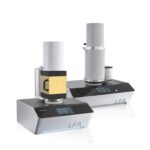
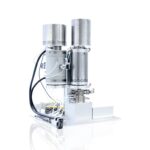
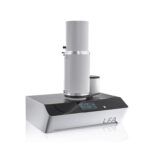
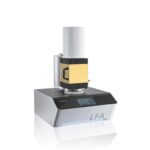
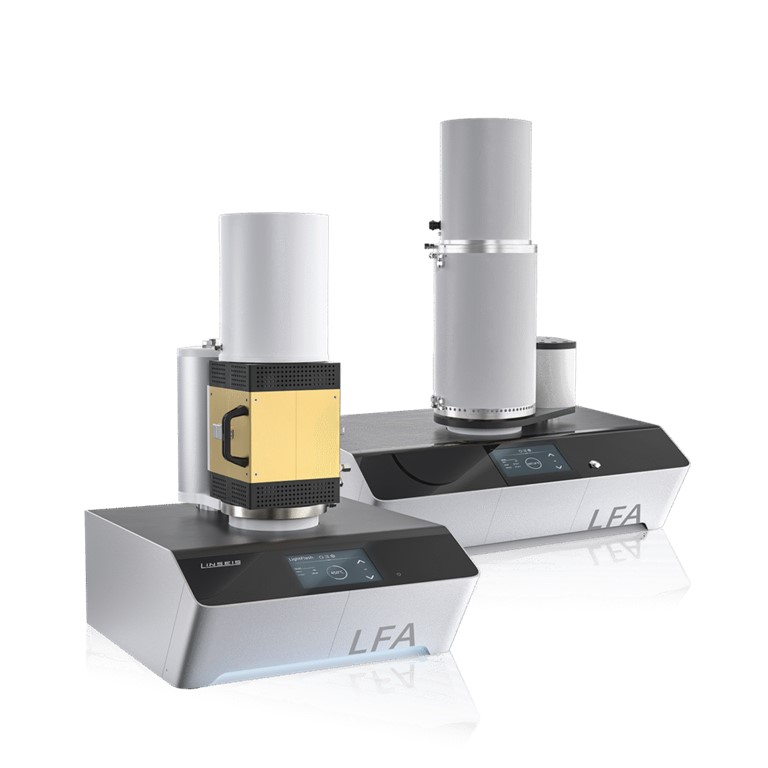
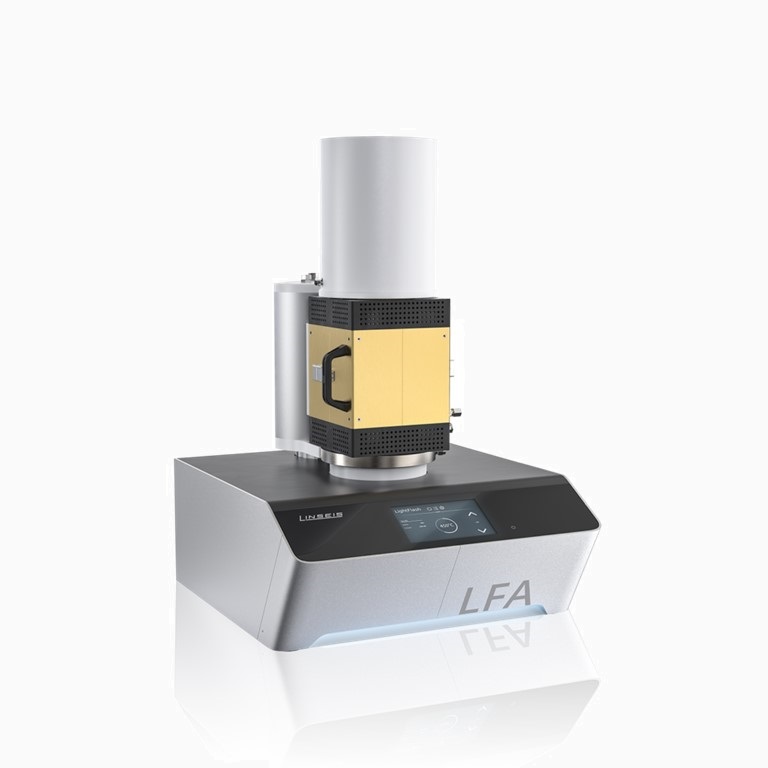
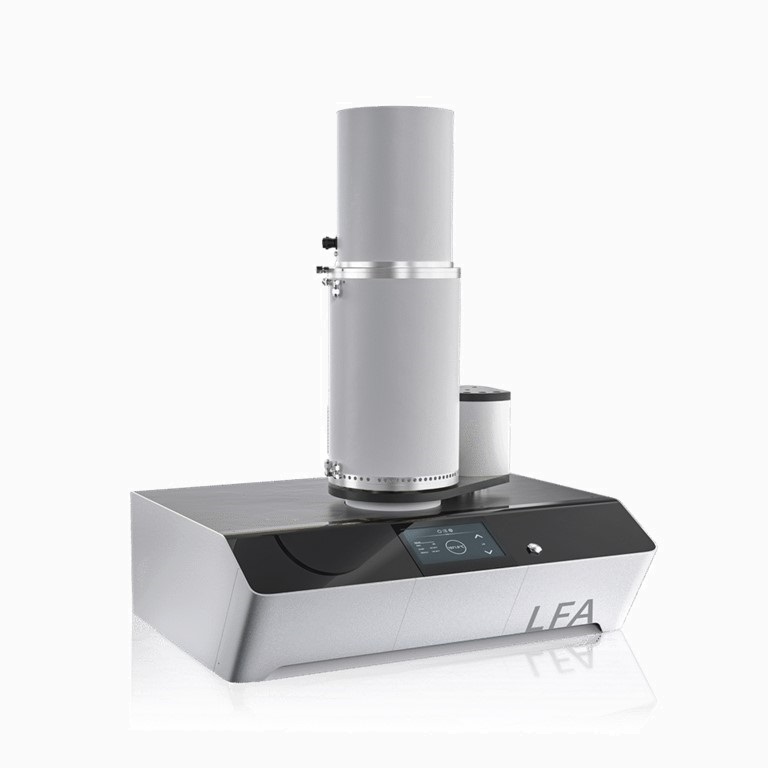
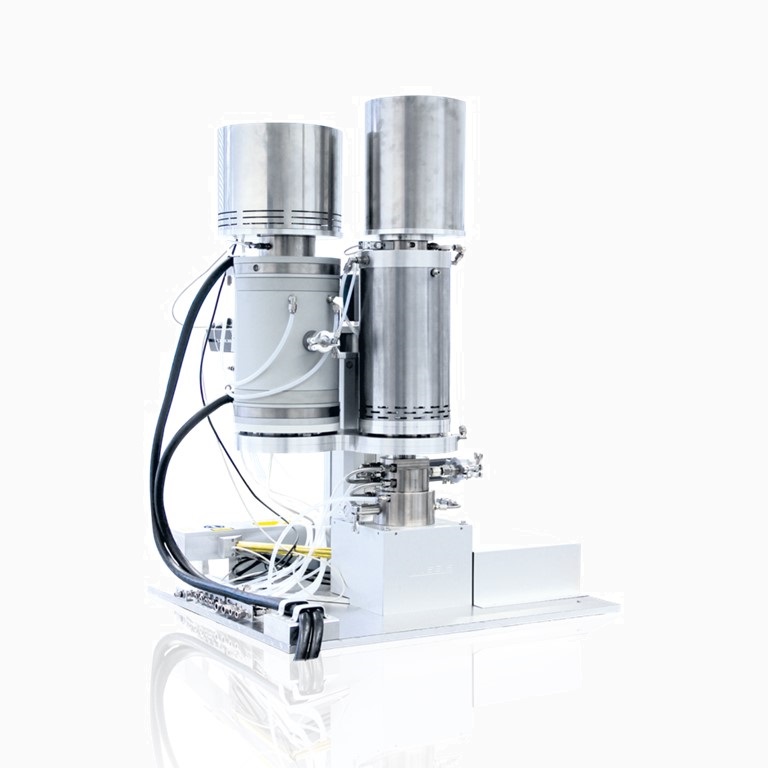
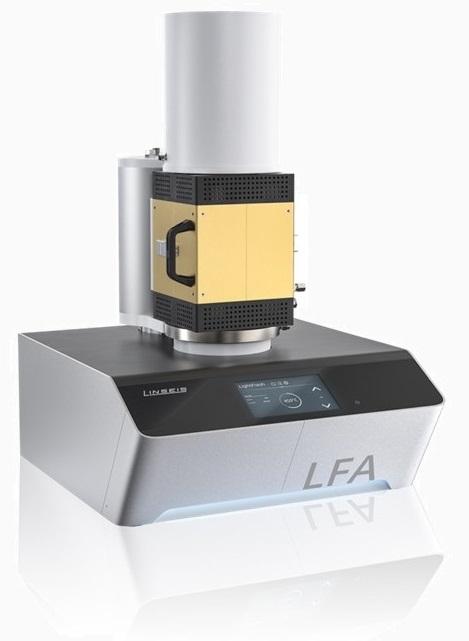
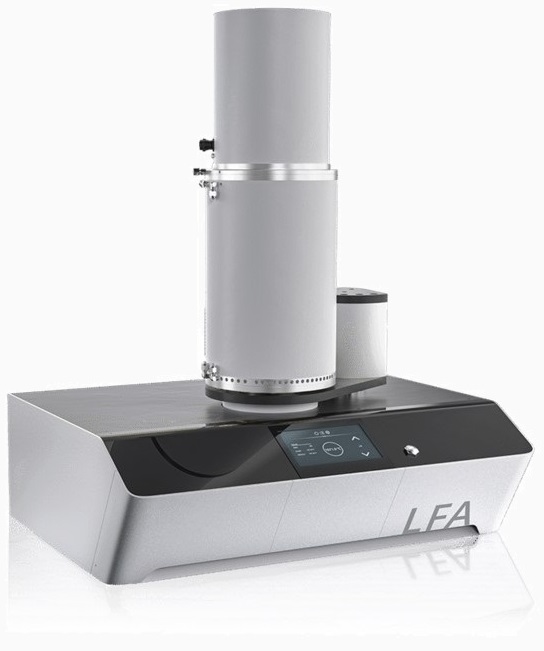
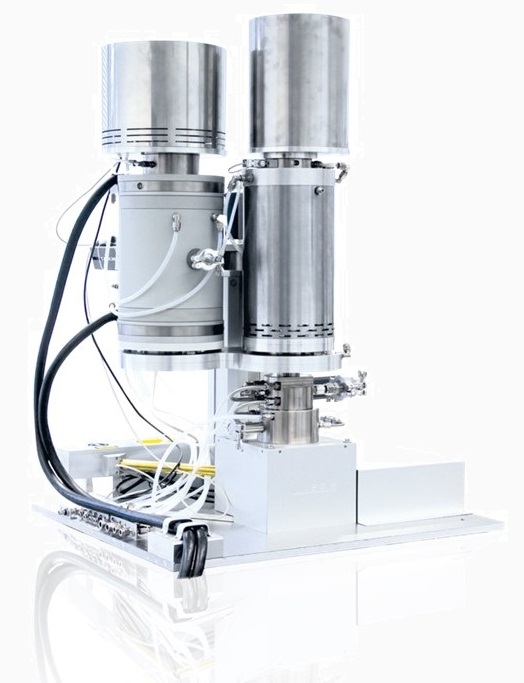
The LINSEIS LFA – Laser Flash Analyzers are high-precision instruments for reliable measurement of thermal conductivity and thermal diffusivity using the laser flash method.
Thermal conductivity measurement using laser flash
The Laser Flash Analyzer (LFA) is a high-precision instrument for measuring the thermal conductivity and thermal diffusivity of materials. This method is particularly important for the characterization of thermal properties in research and industrial applications.
The LFA method is based on the principle that a short laser pulse is applied to the surface of a sample, generating a temperature rise that is measured on the rear side of the sample. This time-temperature response enables the determination of important thermophysical properties such as specific heat capacity, thermal conductivity, and thermal diffusivity.
Basics of LFA measurement
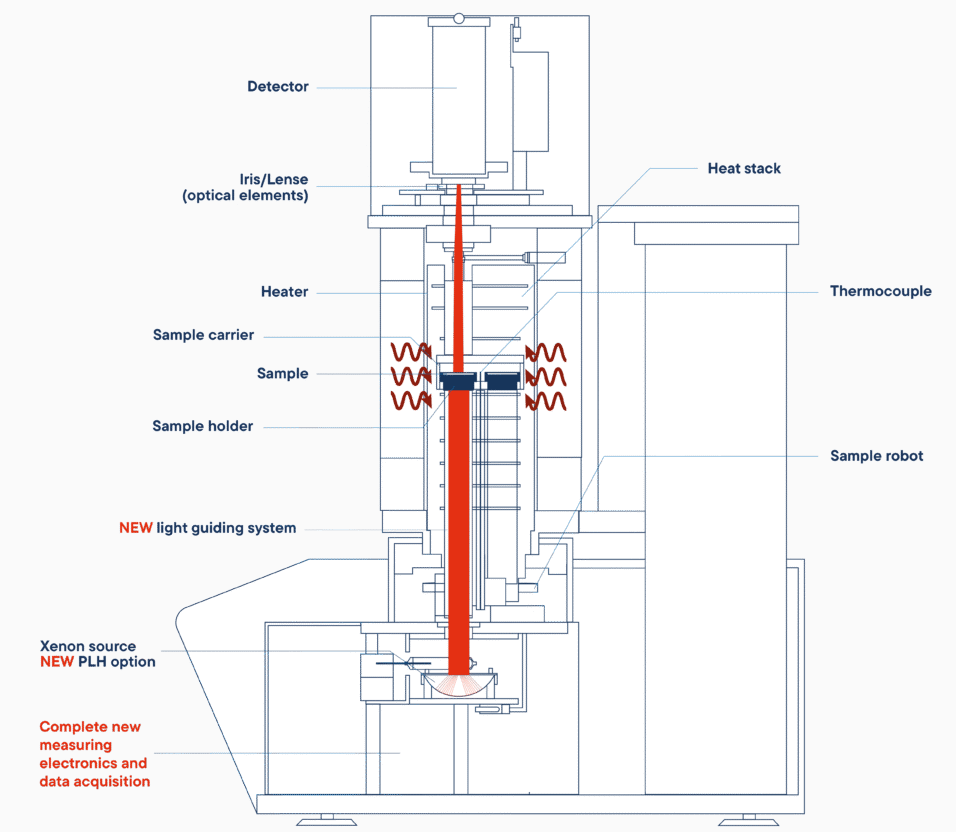
In the LFA method, the sample is first heated homogeneously to ensure uniform thermal conditions. A heat pulse strikes the sample surface and generates a short, intense heating event. This thermal excitation propagates through the sample, while the temperature change on the rear side is measured using an infrared detector.
The recorded data is analyzed to determine the thermal conductivity (λ), thermal diffusivity (α), and specific heat capacity (cp) of the sample with high accuracy and reliability.
Mathematical modeling
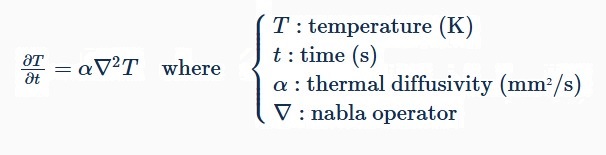
In the LFA method, the sample is first heated homogeneously to ensure uniform thermal conditions. A heat pulse strikes the sample surface and generates a short, intense heating event. This thermal excitation propagates through the sample, while the temperature change on the rear side is measured using an infrared detector.
The recorded data is analyzed to determine the thermal conductivity (λ), thermal diffusivity (α), and specific heat capacity (cp) of the sample with high accuracy and reliability.
By adapting the measured temperature curves to this model, precise values for the thermophysical properties of the sample can be determined.
LFA measuring devices
The LINSEISLFA series includes the LFA 51,LFA 52, and LFA 52 Nuclear, offering high-precision, reliable thermal diffusivity and thermal conductivity measurements using the laser flash method.
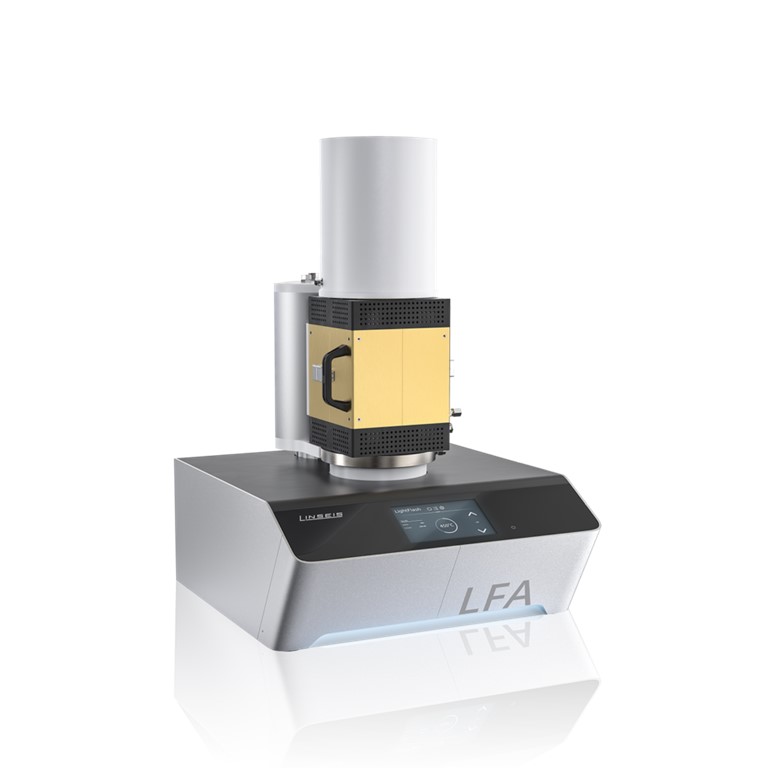
LFA 51 | Simple and cost-effective measurement of Thermal Conductivity
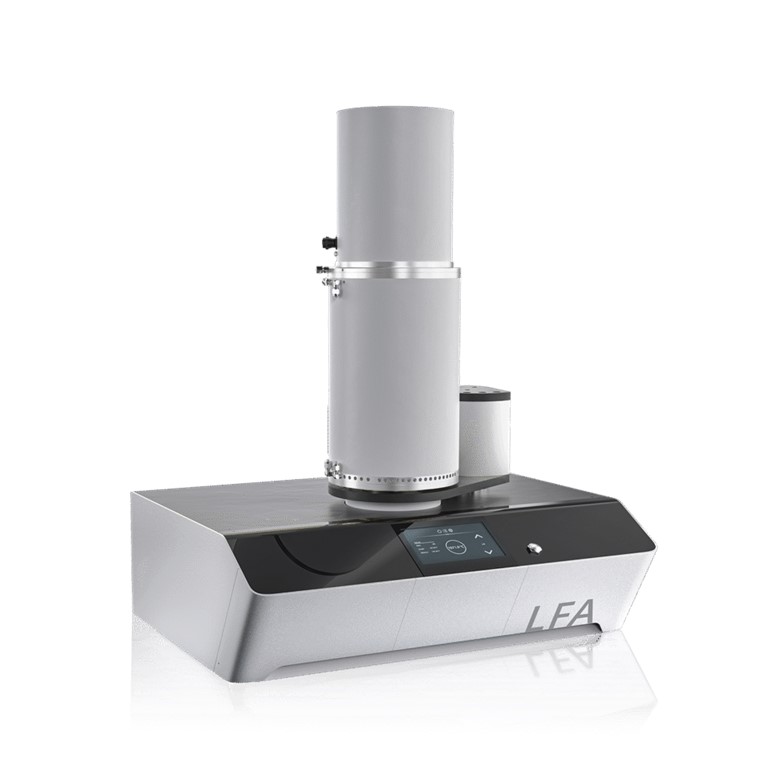
LFA 52 | High-performance LaserFlash for measuring Thermophysical Properties
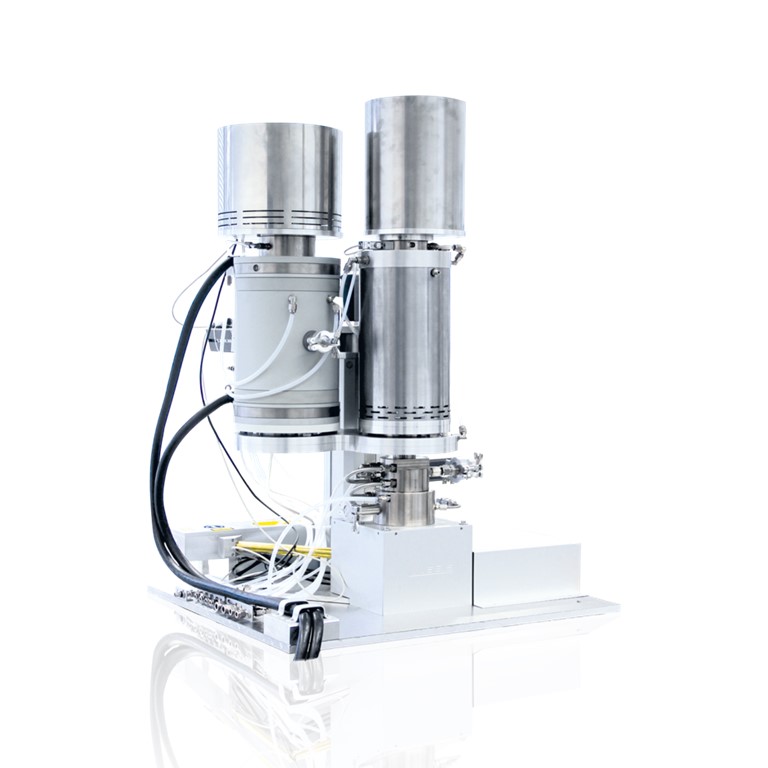
LFA 52 | High-performance Nuclear-LaserFlash for measuring Thermophysical Properties
Designed for research, industrial, and specialized applications, these systems combine advanced furnace technology, accurate temperature control, and flexible configurations for the characterization of a wide range of materials under demanding measurement conditions.
LFA L51
Where Thermal Analysis Meets Innovation
The LINSEIS LFA L51is a versatile Light Flash Analyzer for high-precision measurement of thermal diffusivity, thermal conductivity, and specific heat capacity. It is ideal for the analysis of solids, powders, pastes, and liquids across a wide range of industrial applications including electronic packaging, heat exchangers, thermal insulation, and reactor cooling. With a broad temperature range from -100 °C to 1250 °C, the LFA L51 enables fast, non-contact, and non-destructive measurements with minimal sample preparation and high accuracy.
This absolute measurement method requires no calibration and complies with international standards such as ASTM E-1461, DIN EN 821-2, and DIN 30905. The system is equipped with user-exchangeable InSb or MCT detectors with LN2 or Peltier-cooled operation, including optional automatic LN2 refilling. Vacuum and inert gas operation are supported through an optional gas dosing system, providing maximumflexibility for advanced thermal analysis.
Key Features
☑️ High-performance laser flash system with precise, reliable thermal diffusivity, thermal conductivity, and specific heat measurement ☑️ Ultra-wide temperature range from –100 °C to 1250 °C for versatile material characterization ☑️ High-speed data acquisition at 2.5 MHz enabling accurate analysis of fast and thin materials ☑️ Advanced detector options (InSb / MCT, LN₂ or Peltier-cooled) for flexible and sensitive measurements ☑️ Optimized electronics with enhanced SNR and 16-bit resolution for high-precision and reproducible results ☑️ Gradient-free furnace design ensuring uniform heating and excellent measurement stability ☑️ Flexible sample handling (solids, powders, pastes, laminates, thin films) with complete sample illumination up to 25.4 mm ☑️ Robust system design with vacuum down to 10⁻⁵ mbar and integrated communication (USB/Ethernet) for modern lab environments
Method
The Light Flash Method (LFA) is a fast, non-contact technique for determining the thermal diffusivity, specific heat capacity, and thermal conductivity of solids, powders, and pastes. A short energy pulse heats the rear face of the sample, while the resulting temperature rise on the opposite surface is recorded over time using a high-speed infrared detector.
The measured temperature rise curve reflects how quickly heat propagates through the material. From this data, the thermal diffusivity is calculated, and when specific heat capacity and density are known, the thermal conductivity can also be determined.
The LFA method is non-destructive and high-precision, widely used in materials research, electronics, aerospace, and energy applications. Its key advantages include short measurement times, minimal sample preparation, wide material applicability, and high repeatability under controlled atmospheres.
LFA L51 LT/500/1000
LFA L51 1250
Measurement Principle
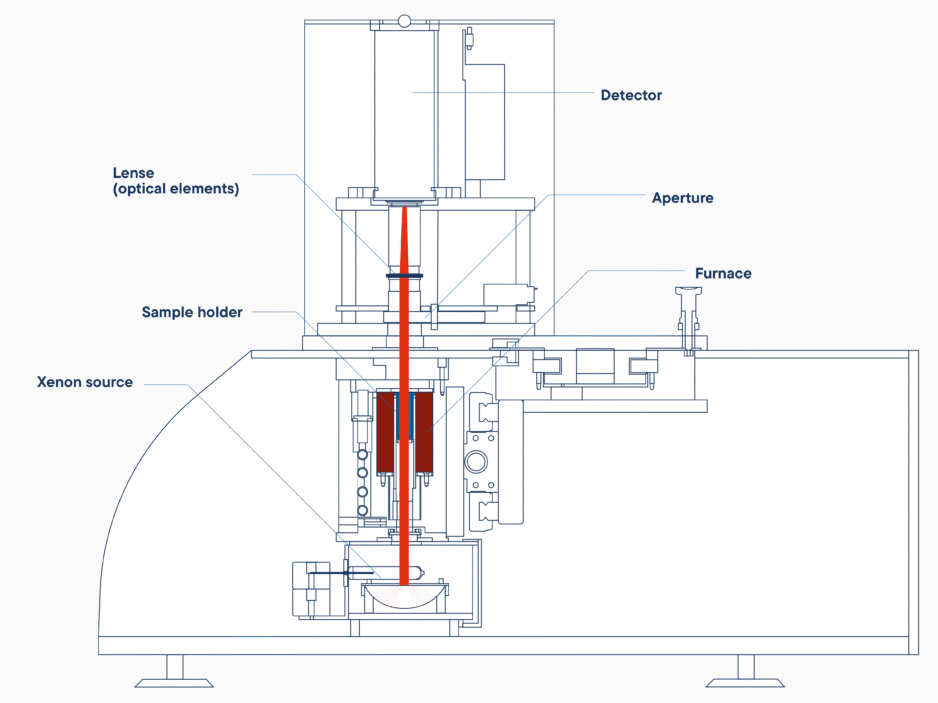
During an LFA measurement, the sample is heated to a defined temperature inside a furnace or microheater. A programmable light pulse – typically generated by a laser or xenon flashlamp – is applied to the bottom side of the sample, causing an instantaneous heating of the rear face and a resulting temperature rise at the top surface.
This temperature change is recorded using a sensitive IR detector as a function of time. The resulting temperature–time curve is used to calculate the thermal diffusivity, based on the half-time of the temperature rise and the thickness of the sample. With additional knowledge of specific heat capacity and density, the thermal conductivity can also be derived.
This method provides accurate results with short measurement durations, supports a wide temperature range, and enables measurements under vacuum or controlled gas atmospheres.
LFA L52
Where Precision Redefines Thermal Conductivity
The LINSEIS LFA L52 is a high-performance Laser Flash Analyzer designed for precise determination of thermal diffusivity, thermal conductivity, and specific heat across an exceptionally wide application spectrum. The system supports simultaneous measurement of up to 3, 6, or 18 samples, enabling high-throughput workflows in research, development, and quality control. Thanks to its modular furnace concept, the LFA L52 covers an unparalleled temperature range from –125 °C to 2800 °C, making it suitable for solids, powders, pastes, and liquids used in advanced industries such as aerospace, ceramics, metallurgy, energy storage, and electronics.
As an absolute measurement method, the Laser Flash technique requires no calibration standards and complies with international norms such as ASTM E-1461 and DIN EN 821-2. The LFA L52 can be equipped with flexible, user-exchangeable detectors and offers optional vacuum and inert gas operation for precise control of measurement conditions. A dual-position furnace turntable minimizes downtime and enables continuous operation across temperature ranges. With fast, non-contact measurements, minimal sample preparation, and outstanding accuracy, the LFA L52 sets a new benchmark for advanced thermophysical material characterization.
Key Features
☑️ New LINSEIS LiEAP software platform with intuitive, streamlined, and efficient workflows for thermophysical analysis ☑️ Automatic updates with continuous feature enhancements, ensuring stable, secure, and up-to-date operation ☑️ Lex Bus plug & play integration enabling seamless, scalable, and modular communication between system components ☑️ High-speed data acquisition tools (2.5 MHz) enabling precise, fast, and reliable thermal transient analysis ☑️ Advanced electronics with enhanced SNR, high-resolution signal processing, and stable laser control for reproducible results ☑️ Broadest temperature range in class (–125 °C to 2800 °C) enabling versatile applications from cryogenic to ultra-high-temperature regimes ☑️ Multi-sample capability (3, 6, or 18 samples) for high-throughput, comparable, and statistically reliable measurements ☑️ Flexible sample holder system with versatile compatibility for solids, powders, liquids, thin films, ceramics, metals, and UHTCs, ensuring optimal thermal contact and accurate results
LFA L52 Nuclear
Special field of application: Nuclear materials
Since the 1950s nuclear energy is the worldwide most important energy source around the world. With their advantage of clean and cheap power supply, core reactors were undergoing a continuous global improvement during the last 50 years. Meanwhile the reactors of the 4th generation such as very high temperature reactors (VHTR) or sodium cooled fast reactors (SFR) as well as the unique molten salt reactor (MSR) are currently under development and will be the future for nuclear energy.
Due to the research that is done in that field, there is a need of analytical equipment and especially instruments for thermal analysis. Of course these special applications and safety requirements need a lot of modifications of the standard devices, that makes Linseis become the worldwide leader in thermal analysis of nuclear materials as we are the most flexible and most experienced player on that market.
Thermal analysis of nuclear materials
In case of any of the mentioned dangers, it gets tricky to operate the system and also to do service and maintenance.
To avoid such problems, the following points must be solved:
☑️ The system must be able to be controlled from a safe place (other room, glovebox, hood) ☑️ All critical parts that have to be accessed for maintenance must be accessible ☑️ Samples must be placed in the system and removed from the system somehow ☑️ All components that get in touch with corrosive substances must be able to withstand them
Key Features
☑️ Fast measuring times thanks to advanced IR-detector technology ☑️ Compatibility with different sample geometries and materials ☑️ Wide temperature range: –125°C to 2800°C ☑️ User-friendly software for comprehensive data analysis ☑️ High-precision and reproducible measurement results ☑️ Modular design enabling flexible customization